
 Tidy and home
Chores for toddlers: easy ways 2 and 3 year olds can help
Toddlers love to help. 15 chores for 2 and 3 year olds, a toddler chore chart with pictures, Montessori ideas and why praise beats prizes at this age.
 The Kidventures team
In short
Toddlers can do real chores: putting toys in a basket, carrying a cup to the counter, wiping a spill, feeding a pet with help. Keep each job to 1 or 2 steps, do it together first, and thank them warmly. At this age, praise and your company motivate better than stickers or treats.

Try this week with your kids
Noki suggests a first week of quests and rewards for a 2 year old. You change what you like before you start.
On this page
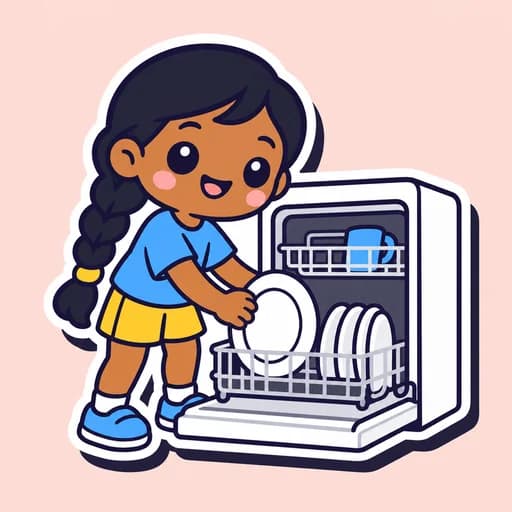
If you have ever tried to unload the dishwasher with a 2 year old "helping", you know the paradox: toddlers are desperate to join in and remarkably slow at it. It is tempting to send them off to play so you can get things done.
Resist that a little. The urge to help is real, it is strong, and it fades if it is never used. This guide gives you 15 chores that work for 2 and 3 year olds and a simple way to set them up so everyone stays calm.
Toddlers are natural helpers
Psychologists Felix Warneken and Michael Tomasello ran a series of now classic experiments in which an adult "accidentally" dropped a clothes peg or struggled to open a cupboard while carrying books. Most 18 month olds toddled over and helped, with no request and no reward (Warneken and Tomasello, 2006).
In a follow-up study, the same team gave some 20 month olds a small toy every time they helped. Later, when the toys stopped, those children helped less than toddlers who had been thanked or simply ignored (Warneken and Tomasello, 2008). The lesson for parents: toddlers already want to help. Your job is to make room for it and avoid turning it into a transaction too early.
15 chores for 2 and 3 year olds
Pick 1 or 2 to start. Each one has 1 or 2 steps at most.
Tidying
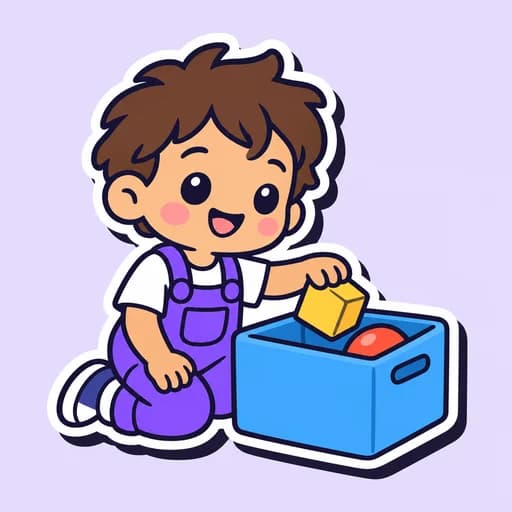
- Put toys back in a basket or bin
- Put books on a low shelf
- Put dirty clothes in the laundry basket
- Carry shoes to the shoe rack
Kitchen and table
- Carry their own cup or plastic plate to the counter
- Put napkins on the table
- Wipe the table with a damp cloth
- Hand you vegetables to wash
Laundry
- Pull clothes out of the dryer into a basket
- Find matching socks (a great color game)
Pets and plants
- Pour a pre-measured scoop of food into the pet bowl, with you there
- Water a plant with a small cup or watering can
Around the house
- Wipe a small spill with a cloth
- Fetch things you name: "Can you bring me the blue towel?"
- Push the button to start the washing machine (with you choosing the program)
Our chore library has more ideas filtered by age, each with simple steps, starting with chores for 2 year olds.
How to set toddlers up for success
Make it physically easy
Low hooks, open baskets and a step stool turn impossible jobs into possible ones. If the toy bin has a lid that pinches, the toys will stay on the floor. A small cloth, a mini dustpan and an unbreakable cup are cheap and make a big difference.
Show, then share, then step back
Toddlers learn by copying. Do the job once while they watch, then do it together, then let them try with you next to them. Describe what you are doing in short sentences: "Cup in the sink. All done!"
Use 1 instruction at a time
"Tidy your room" means nothing to a 2 year old. "Put the cars in the red box" is a job they can finish. When it is done, give the next instruction.
Turn it into a game
Race a song to see if the blocks can be back in the bin before it ends. Sort socks by color. Pretend the laundry basket is a hungry monster. Games are the native language of toddlers, and a playful tone gets more cooperation than a firm one.
Montessori-style jobs at home
Montessori education calls these jobs practical life exercises: everyday tasks such as dusting, sweeping, laying a table and caring for yourself (Association Montessori Internationale). You do not need special materials to borrow the idea:
- A small jug and cup so they can pour their own water
- A child-size broom, dustpan and cloth on a low hook
- Plates and cups on a low shelf they can reach
- A tray for each job, so the tools for wiping or watering stay together
The aim is a home where a 2 year old can start and finish a job without asking for help.
A toddler chore chart with pictures
Non-readers need pictures. Keep it to 3 or 4 jobs, each with a photo or drawing:
| Picture | Job | When |
|---|---|---|
| Toy basket | Toys in the basket | Before bath |
| Cup | Cup to the counter | After breakfast |
| Watering can | Water the plant | Saturday |
| Laundry basket | Pajamas in the basket | After dressing |
Our printable charts include a picture chart for 2 year olds.
Reward charts for toddlers: yes or no?
Visual charts can be lovely for toddlers, as long as they celebrate progress. A picture of each job with a space to stick a star after doing it together is a celebration. A chart that says "3 stickers equals a chocolate" can quietly change the reason for helping, as the toy experiment above suggests.
A good middle ground for 3 year olds: a short picture checklist for routines (teeth, pajamas, toys away) that they tick themselves. The satisfaction of ticking is the reward. When you do start a reward chart, around 3 to 5, keep it to 2 or 3 steps and a tiny, quick prize (our reward chart maker prints one); our guide to reward systems has a chart by age.
Keep expectations realistic
A toddler's attention span for a boring task is a few minutes. Expect jobs to be half finished and redone. That is fine. What you are building is a sense that "in this family, everyone helps", and that comes from repetition far more than from quality.
Some safety basics:
- Keep cleaning products locked away, even when your child is "helping clean". Water and a cloth are plenty.
- Skip anything with sharp edges, heat or heavy lifting.
- Stay within arm's reach for pet feeding and anything near water.
The American Academy of Pediatrics' guidance on toddler development is a good reference for what to expect month by month.
When helping becomes a habit
Around 3, many children start to anticipate jobs: they carry their plate without being asked or go to the basket when you say "tidy-up time". That is the moment to make it part of the routine. Same job, same moment, every day. For the next steps as they grow, see our list of chores by age.
Questions parents ask
Is my 2 year old too young for chores?
No. Research shows that children as young as 18 months spontaneously help adults with simple tasks. A 2 year old can put toys away, carry light things and wipe small spills with you nearby.
Should I reward my toddler for helping?
Warm words and doing the job together work best at this age. In 1 study, toddlers who received a toy for helping later helped less than toddlers who were simply thanked, so keep big rewards for later.
What if my toddler makes more mess than they clean?
That is normal. Choose jobs where mess does not matter much, give them small tools (a dustpan, a mini cloth) and accept a rough result. The goal is the habit of joining in.
What is a Montessori approach to toddler chores?
Montessori calls them practical life exercises: real everyday tasks such as dusting, sweeping, laying a table and caring for yourself, done with child-size tools set out on low shelves so the child can manage alone.
Sources
- Warneken, F., and Tomasello, M. (2006). Altruistic helping in human infants and young chimpanzees. Science, 311(5765).
- Warneken, F., and Tomasello, M. (2008). Extrinsic rewards undermine altruistic tendencies in 20-month-olds. Developmental Psychology, 44(6).
- Gunderson, E. A., and colleagues (2013). Parent praise to 1- to 3-year-olds predicts children's motivational frameworks 5 years later. Child Development, 84(5).
- Association Montessori Internationale. Practical life exercises. AMI Montessori Archives glossary.
- American Academy of Pediatrics. Toddler ages and stages. HealthyChildren.org.